This particular dinosaur specimen was discovered in deposits located west of the city of Grande Prairie in west-central Alberta, Canada.
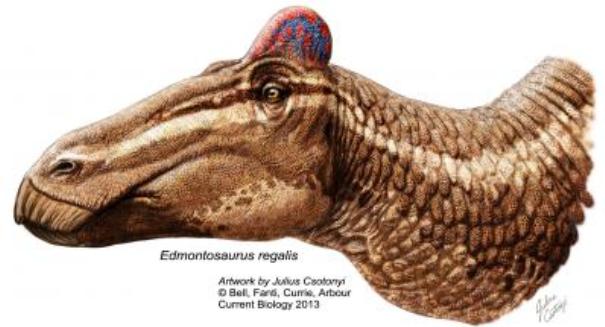
According to a news release from Cell Press, a rare specimen of the duck-billed dinosaur, known as Edmontosauraus regalis, reveals for the first time that those dinosaurs’ heads were beautified with a fleshy “cocks comb” (seen above).
The most commonplace dinosaurs in Northern America between 75 and 65 million years ago, duck-billed dinosaurs were docile creatures, approximately 12 meters long, and held the same ecological role that kangaroos have today. Prior to this discovery, no one thought that they had fleshy structures on the tops of their heads.
“Until now, there has been no evidence for bizarre soft-tissue display structures among dinosaurs; these findings dramatically alter our perception of the appearance and behavior of this well-known dinosaur and allow us to comment on the evolution of head crests in this group,” noted Phil Bell from Australia’s University of New England in a statement.
This particular dinosaur specimen was discovered in deposits located west of the city of Grande Prairie in west-central Alberta, Canada. The researchers’ interest was piqued when they discovered skin marks on parts of the fossilized body. However, it wasn’t until Bell poked a chisel through the top of the crest that he knew they had found something really special.
According to Bell, “an elephant’s trunk or a rooster’s crest might never fossilize because there’s no bone in them.”
Researchers aren’t sure what the cocks comb did for the duck-billed dinosaurs. However, there’s some speculation that it may have been used to attract mates.
The study’s findings are described in greater detail in the journal Current Biology.


Leave a Reply