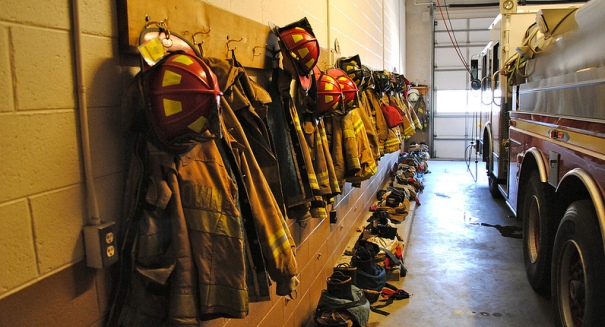
Following the 9/11 tragedy, first responders at Ground Zero were exposed to varying levels of a dust cloud of air filled with cement dust, smoke, glass fibers, and different heavy metals.
For the very first time, researchers have linked the high levels of particulate matter inhaled by first responders at Ground Zero to kidney damage. Researchers from the WTC-CHEST Program, a subset of the World Trade Center Health Program Clinical Center for Excellence at Icahn School of Medicine at Mount Sinai, presented these new findings at the 2013 American Society of Nephrology Kidney Week meeting.
Following the 9/11 tragedy, first responders at Ground Zero were exposed to varying levels of a dust cloud of air filled with cement dust, smoke, glass fibers, and different heavy metals. The WTC-CHEST Program at Mount Sinai has previously linked this particulate matter exposure to both lung and heart abnormalities. However, the effects on the kidney health of first responders had never been explored before.
In this new study, Mount Sinai researchers examined urine samples from 183 first responders exposed to particulate matter at Ground Zero, taking into account each first responder’s time of arrival, proximity, duration, and level of exposure at Ground Zero. To assess their kidney damage, researchers measured the level of the protein called albumin in their urine. When this protein is found in urine it is abnormal and an indicator of renal damage. Study results show a significant link between a high level of particulate matter exposure and an increased level of albumin in the urine.
“Our study shows the first responders with the highest exposure to the 9/11 particulate matter had significantly greater levels of albumin in their urine than the first responders in the study with low exposure levels,” says Mary Ann McLaughlin, MD, principal investigator for the WTC-CHEST Program at Icahn School of Medicine at Mount Sinai who also serves as medical director of the Cardiac Health Program and co-director of the Women’s Cardiac Assessment and Risk Evaluation Program at The Mount Sinai Hospital. “We believe high exposure to the massive dust cloud of air pollution at Ground Zero may have extremely inflamed the endothelial lining of blood vessels leading to the kidneys causing kidney malfunction and the development of kidney damage in first responders.”
“We observed a statistically significant and independent relationship between first responder’s high exposure to particulate matter and albuminuria,” says Dr. McLaughlin. “Our novel research findings will pave the way for the future early diagnosis and care of these first responders’ impaired kidney health. Also, in addition, it will lead to further exploration of the impact of environmental exposures and inflammation in the pathogenesis of albuminuria.”


Leave a Reply