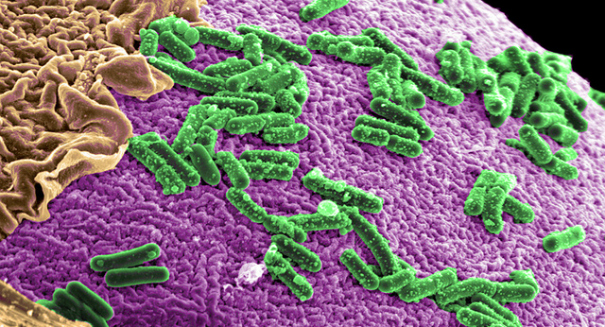
The transplanting of gut microbes from humans to mice led to metabolic changes in the rodents that are associated with obesity in humans.
Germ free mice that received gut bacteria from obese humans gained more weight and accumulated more fat than mice given gut bacteria from lean humans, a new study reveals. These findings demonstrate the transmission of physical and metabolic traits through communities of gut microbes depends on the rodents’ diet. Researchers are suggesting that it might represent an important step toward the development of personalized probiotic and food-based therapies capable of treating and preventing obesity.
This new research follows a related study that shows a variety of microbial genes in the gut can influence obesity and that high fiber foods, like fruits and vegetables, boosts bacterial diversity. However, this new study also shows directly that microbial communities from the gut can transmit either lean or obese traits. It also begins to identify specific microbes involved, as well as their designated role and how those roles are related to the foods we consume. Bacteroides, for instance, have been observed at increased levels in the microbiota of lean people and were found to play a protective role against fat accumulation in mice consuming certain diets.
Graduate student from Washington University’s School of Medicine, Vanessa Ridaura, and her colleagues took samples of the microbes living in the guts of human fraternal and identical twins. For each pair of samples, one twin was lean and the other obese. Researchers then transplanted the gut microbe samples into the guts of germ free mice that had been raised in sterile conditions and had no microbes of their own.
“The first thing that Vanessa identified in these mice, which were consuming a standard mouse diet, was that the recipients of the obese twins’ microbiota gained more fat than the recipients of the lean twins’ microbiota,” explained Jeffrey Gordon, director for the Center of Genome Sciences and Systems Biology at Washington University School of Medicine and a co-author of the Science report. “This wasn’t attributable to differences in the amount of food they consumed, so there was something in the microbiota that was able to transmit this trait. Our question became: What were the components responsible?”
The transplanting of gut microbes from humans to mice led to metabolic changes in the rodents that are associated with obesity in humans. Researchers conducted what was referred to as “The Battle of the Microbiota,” which involved keeping the mice that received microbes from a lean twin with the mice that received microbes from an obese twin.
After being caged together for 10 days, the researchers found that the mice who received microbes from an obese twin adopted a “learner” feature from the mice that received microbes from a lean twin, when they were housed with them. On the other hand, mice who received microbes from a lean twin and were housed with the ones who received microbes from an obese twin were unaffected by anything.
The results of this study were published in the September 6 issue of the journal Science.


Leave a Reply